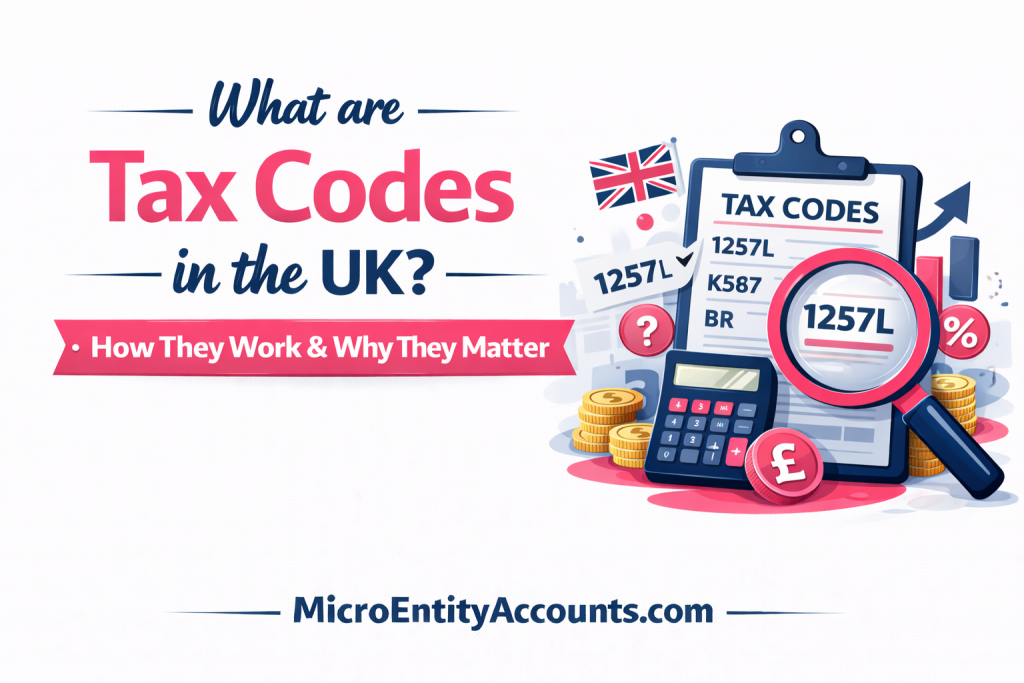
The 1257L tax code is the standard tax code used for most employees and pension recipients in the UK. It tells your employer or pension provider that you are entitled to the full tax-free Personal Allowance of £12,570 for the current tax year, and that income above that threshold should be taxed at the standard rates.
If you have one job, no unusual income, and no outstanding tax owed to HMRC, 1257L is the code you would expect to see on your payslip.
What Does the 1257L Tax Code Actually Mean?
A tax code is made up of two parts: a number and one or more letters. Each part carries specific information that your employer uses to calculate how much Income Tax to deduct from your pay.
In the case of 1257L, the number 1257 represents your tax-free Personal Allowance divided by ten. So 1257 × 10 = £12,570 — the amount of income you can earn each tax year without paying any Income Tax on it.
The letter L confirms that you are entitled to the standard Personal Allowance with no adjustments. It is the most common letter you will see on a UK tax code.
Put simply, the 1257L code means: earn up to £12,570 tax-free, then pay Income Tax on everything above that at the appropriate rate.
The current tax year runs from 6 April 2026 to 5 April 2027. The standard Personal Allowance has remained at £12,570 and the 1257L code continues to be the default for most people.
Is 1257L a Good Tax Code?
Yes — 1257L is the best standard tax code you can have as an employee with a single income source. It means:
- You are receiving the full Personal Allowance of £12,570
- You are not being taxed on income you should not be paying tax on
- HMRC does not believe you have outstanding tax debt, unpaid liabilities, or undisclosed income
- Your employer is not applying an emergency or restricted code to your pay
A ‘good’ tax code is simply the correct one for your circumstances. For the majority of UK workers, 1257L is exactly that. If you are on a code with a lower number — say 500L or 800L — it means your effective tax-free allowance has been reduced, usually because HMRC is collecting something through your pay that is owed from elsewhere.
The only situation where 1257L might not be ideal is if you are entitled to a higher code, for example through Marriage Allowance or certain work-related allowances. In that case, you should be on a higher number, and your 1257L code would actually be costing you money.
If you think you may be entitled to more than the standard allowance — for example, you never claimed Marriage Allowance — it is worth checking your Personal Tax Account at gov.uk. You could be sitting on a refund.
Is 1257L 20%? How Much Tax Do You Actually Pay?
The 1257L tax code itself does not set the tax rate — it sets the tax-free amount. The rate you pay depends on how much you earn above the £12,570 threshold.
Here are the current Income Tax bands as confirmed by GOV.UK for the 2026 to 2027 tax year:
| Band | Taxable Income (2026–27) | Tax Rate |
|---|---|---|
| Personal Allowance | Up to £12,570 | 0% |
| Basic Rate | £12,571 to £50,270 | 20% |
| Higher Rate | £50,271 to £125,140 | 40% |
| Additional Rate | Over £125,140 | 45% |
Source: GOV.UK — Income Tax rates and Personal Allowances (current tax year: 6 April 2026 to 5 April 2027)
So for someone on the 1257L code:
- If you earn up to £12,570 — you pay no Income Tax at all
- If you earn between £12,571 and £50,270 — you pay 20% on the taxable portion
- If you earn between £50,271 and £125,140 — you pay 40% on the portion in that band
- If you earn over £125,140 — you pay 45% on income above that threshold
To make it concrete: if you earn £30,000 a year and are on code 1257L, your taxable income is £30,000 minus £12,570, which is £17,430. You pay 20% on £17,430, giving a tax bill of £3,486 for the year — roughly £290.50 per month.
Note: if your income goes above £100,000, your Personal Allowance starts to reduce by £1 for every £2 you earn over that figure. By £125,140 it has gone entirely, which effectively creates a 60% marginal rate on income between those two figures.
What Is the L on a Tax Code?
The letter in your tax code tells HMRC and your employer something specific about your entitlement or situation. L is just one of many letters used in the UK tax code system.
Here is what the most common letters mean:
| Letter | What It Means | Typical Situation |
|---|---|---|
| L | Standard Personal Allowance | Most employees and sole traders with one income source |
| M | Marriage Allowance received (extra 10% allowance) | Your partner has transferred part of their allowance to you |
| N | Marriage Allowance given (10% transferred away) | You have transferred part of your allowance to your partner |
| T | HMRC needs to review your code | Certain items need checking before a final code is issued |
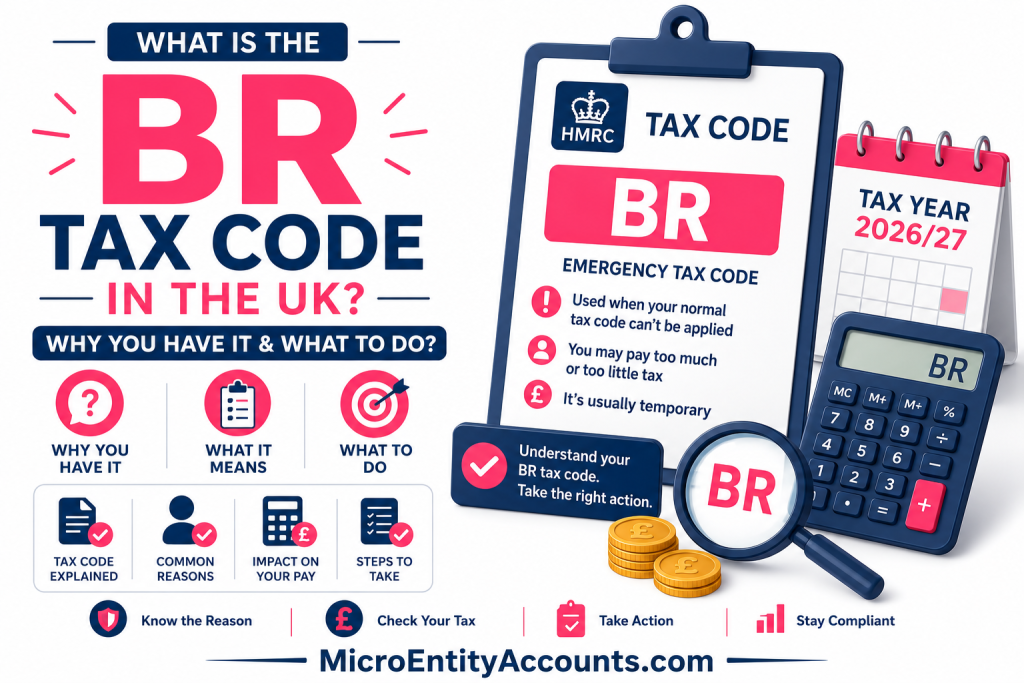
| BR | All income taxed at basic rate (20%) — no allowance | Second job or second pension (Personal Allowance used elsewhere) |
| D0 | All income taxed at higher rate (40%) — no allowance | Higher-rate second job income |
| D1 | All income taxed at additional rate (45%) | Additional-rate second income |
| K | Negative allowance — extra income added to taxable figure | Unpaid prior-year tax collected through PAYE |
| NT | No tax deducted | Rare — specific HMRC exemptions only |
| S | Scottish Income Tax rates apply | You live in Scotland |
| C | Welsh Income Tax rates apply | You live in Wales |
The letter L is by far the most common. If your tax code ends in L — whether it is 1257L, 1383L, or any other number — it simply means you are on the standard Personal Allowance arrangement with no complications attached.
Your tax code letter is updated by HMRC when your circumstances change. If you move to Scotland, it will change to S1257L. If you receive Marriage Allowance, the number will increase and the letter may change to M. Always check your P2 coding notice when one arrives in the post or your personal tax account online.
Is 1257L an Emergency Tax Code?
No. 1257L is not an emergency tax code — it is the standard code. Emergency tax codes look different and work in a fundamentally different way.
Emergency codes are typically written as:
- 1257L W1 — used for weekly-paid employees
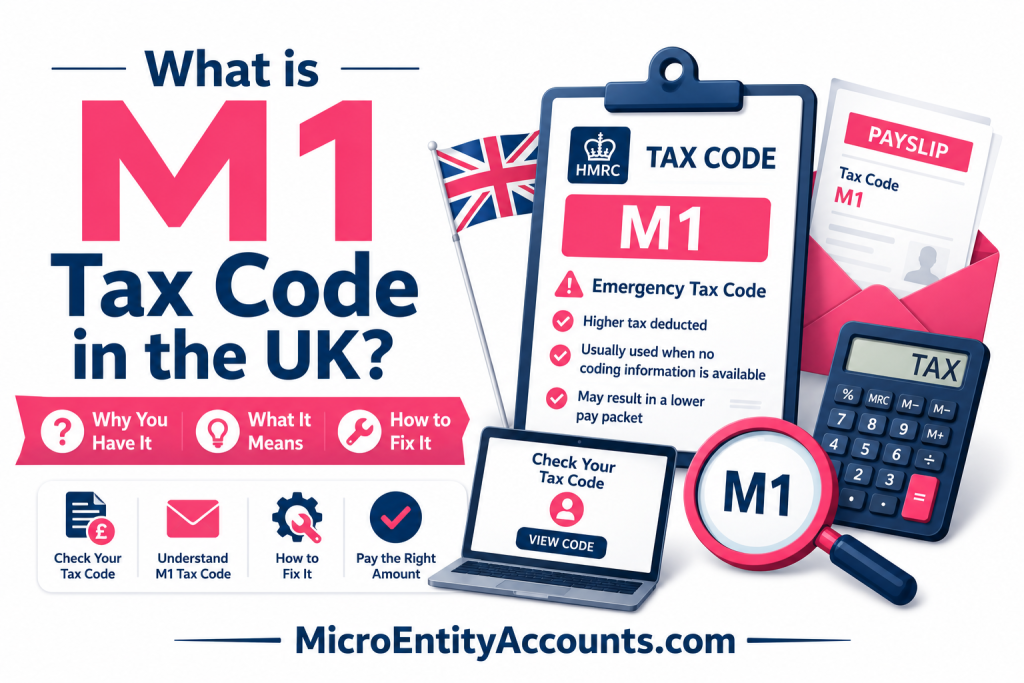
- 1257L M1 — used for monthly-paid employees
- 1257L X — a less common variant of the emergency code
The suffix W1 or M1 (which stands for Week 1 or Month 1) is the critical difference. It means tax is calculated on a non-cumulative basis — that is, HMRC calculates your tax as if each pay period is the first one of the year, without factoring in how much you have already earned or paid in previous months.
The table below shows how 1257L compares to the emergency code variants and other codes you might encounter:
| Code | Tax-Free Amount | Cumulative? | What Happens |
|---|---|---|---|
| 1257L | £12,570 | Yes | Tax spread evenly across the year. Most accurate result. |
| 1257L W1 | £1,047/mth | No | Tax calculated per period only. No credit for earlier months. |
| 1257L M1 | £1,047/mth | No | Same as W1 — monthly version. Used for new starters. |
| BR | None | Yes | All income taxed at 20%. No allowance at all. |
| 0T | None | No | No allowance and non-cumulative. Highest tax of the emergency codes. |
With the standard 1257L code, your tax is cumulative — meaning if you were overtaxed in April, the system corrects itself automatically in later months. With W1 or M1, there is no such correction within the year. This is why emergency codes can leave you over or underpaying tax until they are resolved.
Why Might You End Up on an Emergency Code?
Emergency codes are triggered when HMRC does not have enough information about your income to issue a full-year code. Common reasons include:
- Starting a new job without providing a P45 from your previous employer
- Returning to work after a long gap in employment
- Starting your first ever job in the UK
- Moving from self-employment back into PAYE employment
If you see W1 or M1 next to your tax code on your payslip, contact HMRC or give your employer your P45 so the code can be updated. Most emergency codes are corrected within one or two pay periods once the right information is in the system.
A note on the question ‘Is 1275L an emergency code?’ — there is no tax code 1275L. This is likely a misreading or typo of 1257L. The standard code is always 1257L (one-two-five-seven-L), and it is definitely not an emergency code.
Does the 1257L Tax Code Apply If You Are Self-Employed?
If you are a sole trader and your only income is from self-employment, you will not normally have a tax code at all. Self-employed people pay Income Tax and National Insurance through Self Assessment by filing a tax return each year — PAYE codes do not apply to that income.
However, tax codes do become relevant for self-employed people in certain situations:
- You also have employment income: If you are employed and self-employed at the same time, your 1257L code will apply to your employed income.
- You collect tax on a pension: Pension providers operate PAYE, so if you draw a pension alongside self-employment income, a code will apply to the pension.
- HMRC collects outstanding tax through your code: If your Self Assessment return shows tax owed, HMRC can sometimes reduce your PAYE code to collect the debt through your employment income.
If you are a director of your own limited company and pay yourself a salary through PAYE, the 1257L code applies to that salary in the same way it does for any employee. Your dividends, however, sit outside PAYE and are handled separately.

How Do You Check or Change Your 1257L Tax Code?
There are three straightforward ways to manage your tax code:
1. Check Your Personal Tax Account
Log into your HMRC Personal Tax Account at gov.uk. You can see your current tax code, the breakdown of how it was calculated, and your tax history. This is the quickest way to check whether your code is correct.
2. Check Your Payslip or P60
Your current tax code is printed on every payslip, usually near your National Insurance number. Your P60, which your employer issues at the end of each tax year, also shows the code used for the year.
3. Contact HMRC Directly
If you believe your code is wrong, call the HMRC income tax helpline on 0300 200 3300. Have your National Insurance number, payslip, and any recent P2 coding notice to hand. HMRC will review your position and issue an updated code directly to your employer if a change is needed.
HMRC can refund overpaid tax going back up to four tax years. If you have been on the wrong code for a while and have been overpaying, it is worth making the call — you could receive a meaningful refund.
FAQs About 1257L Tax Code in the UK
Can I have a different tax code on each job?
Yes. If you have two jobs, your Personal Allowance is typically applied to your main job — so that income uses code 1257L. Your second job will usually have a BR code, which taxes all of that income at 20% with no allowance. This is because you can only receive the Personal Allowance once, not twice.
What does it mean if my tax code number is lower than 1257?
A lower number means your effective tax-free allowance has been reduced. This usually happens because HMRC is collecting something through your PAYE code — typically unpaid tax from a previous year, a taxable benefit like a company car, or income from another source such as rental income. If you do not recognise why your allowance is reduced, contact HMRC and ask them to explain the coding notice.
Will my tax code change every year?
Not necessarily. If nothing changes in your personal or financial circumstances, your code may stay the same year on year. HMRC does review codes at the start of each tax year and will issue a new P2 notice if your code changes. Always read this notice when it arrives — it is your chance to flag anything that looks incorrect before it affects your pay.
What if I am on 1257L but I think I am paying too much tax?
The code itself is not always the issue. If you are paying more tax than expected, it is worth checking: whether all your allowable expenses are being claimed (for the self-employed), whether you are claiming all available reliefs, and whether your P11D benefit values are accurate if you receive benefits in kind. An accountant can run through your position and identify anything that might reduce your bill.
Final Thoughts
The 1257L tax code is straightforward once you understand what the two parts mean. The number tells your employer your tax-free allowance, and the letter L confirms you are on the standard arrangement. If you are on 1257L and your circumstances are simple — one job, no unusual income, no owed tax — your code is almost certainly correct.
Where it gets more complicated is when circumstances change: you take on a second income, you move to Scotland, you receive a benefit from your employer, or you owe tax from a prior year. In any of those situations, your code may need updating, and not checking it can cost you.
If you are self-employed or running your own limited company and want to make sure your tax position is accurate — whether that is your PAYE code, your Self Assessment return, or both — the team at Micro Entity Accounts is here to help. Getting it right from the start is always easier than fixing it later.
Disclaimer: The content on MicroEntityAccounts is for informational purposes only and do not constitute tax or financial advice. We recommend consulting a certified tax professional or the HM Revenue and Customs Dept (HMRC) for accurate guidance. MicroEntityAccounts is not responsible for any decisions made based on the information provided.