A tax code is a unique alphanumeric identifier used by HM Revenue & Customs (HMRC) to determine the correct Income Tax deduction from salaries or pensions in the UK. Tax codes guide employers and pension providers in applying the Pay As You Earn (PAYE) system, ensuring accurate tax collection based on personal allowances and taxable benefits.
Incorrect tax codes can result in overpayment or underpayment, creating unexpected tax liabilities or refunds. Common examples include 1257L for most employees, BR for basic rate taxpayers, and D0 tax code for higher-rate earners. Understanding your tax code helps you verify your deductions and maintain compliance with HMRC regulations.
What Are Tax Codes in the UK?
A tax code is made up of numbers and letters. The number part tells your employer how much income you can earn before tax starts being deducted. The letter part gives extra information about your situation, such as whether you are entitled to the standard Personal Allowance, whether you have a second job, or whether you live in Scotland or Wales.
HMRC works out your tax code based on information it holds about you. This includes your employment records, benefits, pension income, and any outstanding tax from previous years. Once HMRC has worked out the right code, it sends a PAYE Coding Notice (also called a P2) to both you and your employer.
Your tax code is not just a piece of admin. It directly controls how much money leaves your pay packet each month. Even a small error can add up to hundreds of pounds over a tax year.
How Do Tax Codes Actually Work?
The number in your tax code is almost always your tax-free allowance divided by ten. So the most common code, 1257L, means you can earn £12,570 before paying any Income Tax. Your employer uses this figure to calculate how much tax to deduct from each pay period.
Here is a simple example. If you earn £30,000 a year and your code is 1257L:
- Your tax-free income is £12,570
- Your taxable income is £30,000 minus £12,570, which is £17,430
- You pay 20% tax on £17,430, which comes to £3,486 per year or roughly £290 per month
What are the Current UK Income Tax Rates? (2025 to 2026 Tax Year)
The current tax year runs from 6 April 2025 to 5 April 2026. The standard Personal Allowance remains £12,570. The table below shows the Income Tax bands that apply in England, Northern Ireland, and Wales. Scottish rates differ and are covered further below.
| Band | Taxable Income | Tax Rate |
| Personal Allowance | Up to £12,570 | 0% |
| Basic Rate | £12,571 to £50,270 | 20% |
| Higher Rate | £50,271 to £125,140 | 40% |
| Additional Rate | Over £125,140 | 45% |
Source: GOV.UK, Income Tax rates and Personal Allowances (2025 to 2026)
One thing worth knowing: if your income is above £100,000, your Personal Allowance starts to reduce. For every £2 you earn over £100,000, you lose £1 of your allowance.
By the time you earn £125,140 or more, your Personal Allowance is gone entirely. This effectively creates a 60% marginal tax rate on income between £100,000 and £125,140, which catches many higher earners off guard.
What Does a 1257L Tax Code Mean?
The 1257L tax code is the most common tax code in the UK. Most employees on a standard salary with one job and no unusual circumstances will have this code.
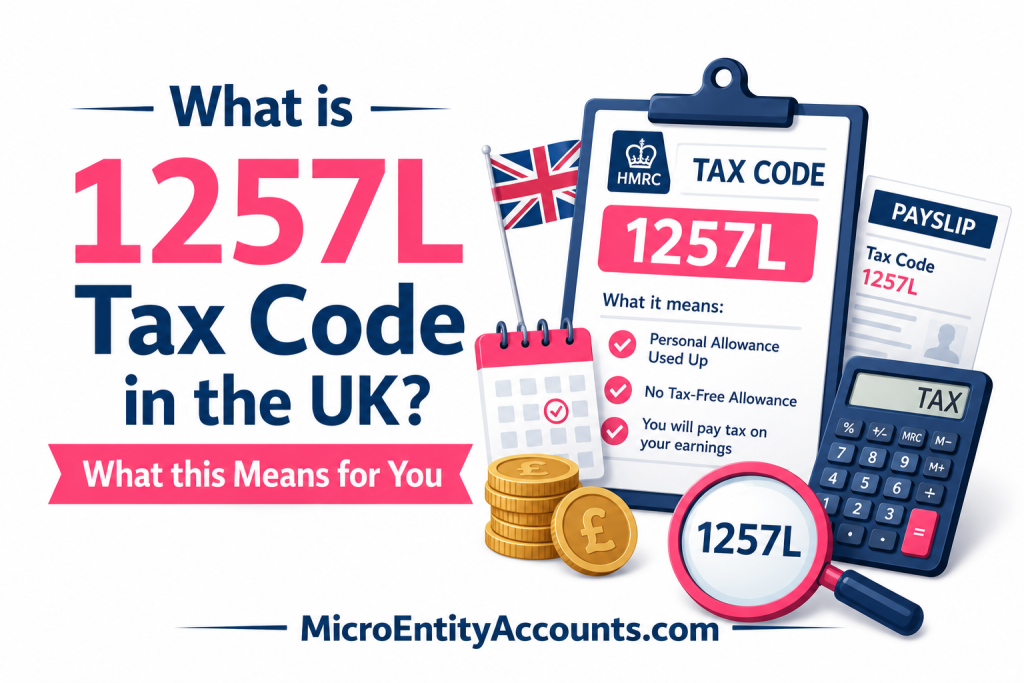
The number 1257 represents your tax-free Personal Allowance of £12,570 (the last digit is dropped). The letter L means you are entitled to the standard Personal Allowance with no adjustments.
In practical terms, this code tells your employer that the first £12,570 of your income each year should be free of Income Tax, and everything above that threshold should be taxed at the appropriate rate.
When Might Your 1257L Code Change?
Your tax code can change if your circumstances change. Some common reasons include:
- You start receiving a company benefit like a car or private medical insurance
- You owe tax from a previous year and HMRC collects it through your code
- You receive income from more than one source
- You claim Marriage Allowance
- You move to Scotland or Wales
If any of these apply to you, HMRC will usually update your code and send you a new P2 notice. Always check it when it arrives.
What Is the Tax Code L or M?
The letters in your tax code each carry a specific meaning. Here is what L and M mean in simple terms:
Tax Code L – Standard Personal Allowance
The letter L after the number in your tax code means you are entitled to the standard Personal Allowance for the year. This is the most common letter you will see. If your code is 1257L, the L simply confirms that you get the standard allowance with no deductions or additions.
Tax Code M – Marriage Allowance Received
The letter M means you have received 10% of your partner’s Personal Allowance through the Marriage Allowance scheme. In the 2025 to 2026 tax year, that means an extra £1,260 of tax-free income on top of your standard allowance.
This is available to couples where one partner earns below the Personal Allowance threshold and the other pays the basic rate of Income Tax.
If your partner has transferred their allowance to you, your tax code might look something like 1383M, reflecting the higher allowance you now hold.
Marriage Allowance is worth up to £252 per year in tax savings. If you or your partner earns below £12,570 and the other is a basic rate taxpayer, it is worth claiming if you have not already.
Quick Reference: Common UK Tax Codes Explained
The table below covers the tax codes you are most likely to come across, whether you are employed, self-employed, or have more than one source of income.
| Tax Code | What It Means |
| 1257L | Standard tax code. You get the full £12,570 Personal Allowance. |
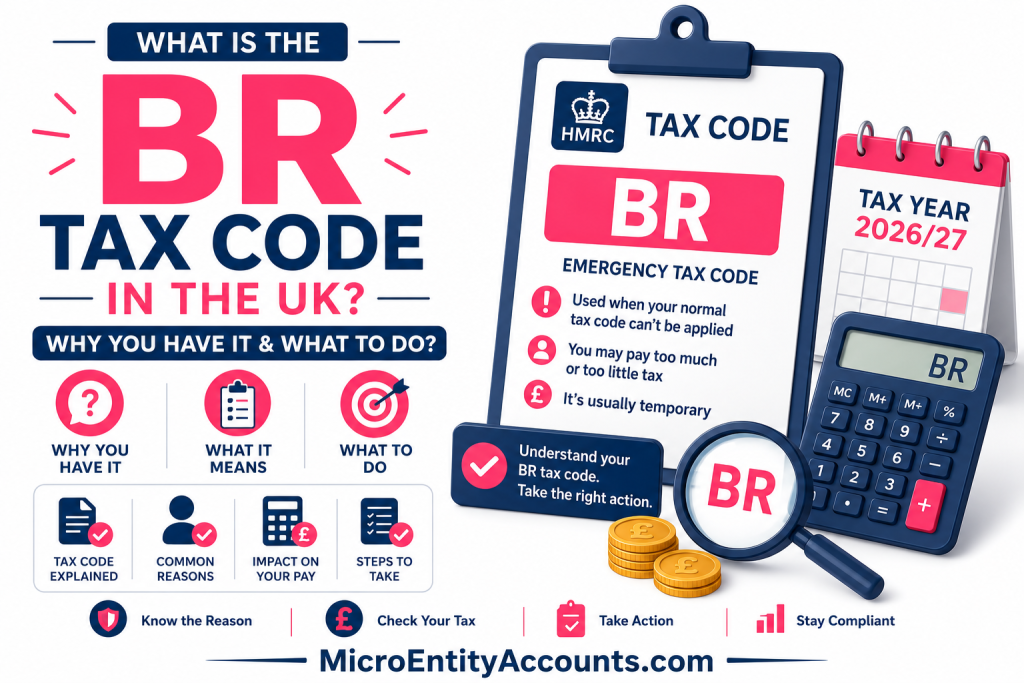
| BR | All income is taxed at the basic rate (20%). No Personal Allowance applied. |
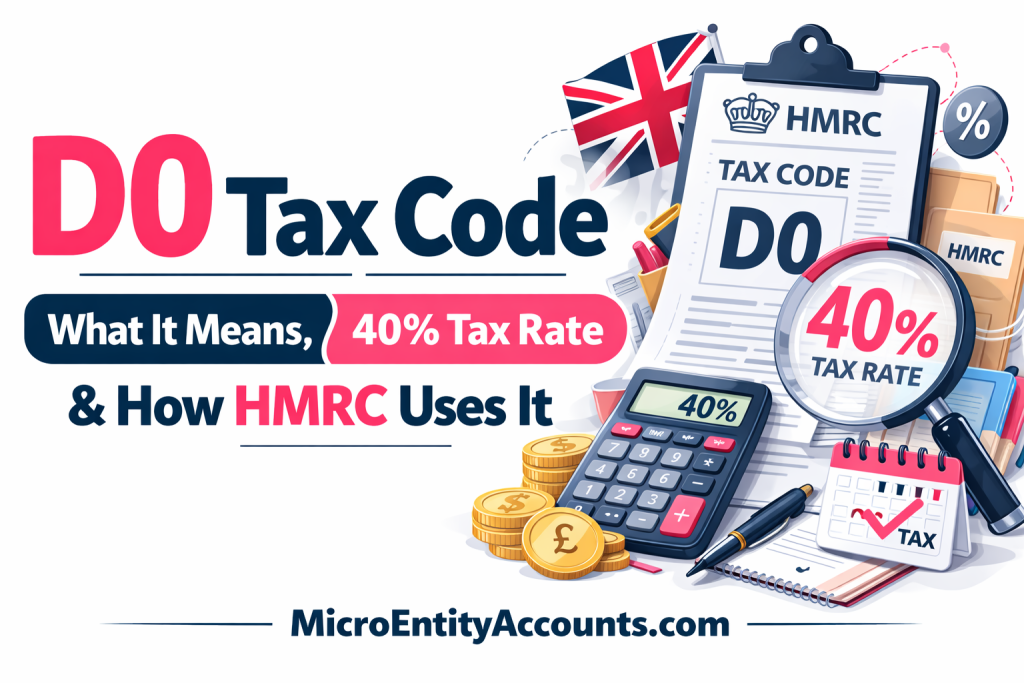
| D0 | All income taxed at the higher rate (40%). Common for second jobs. |
| D1 | All income taxed at the additional rate (45%). |
| NT | No tax is deducted from your income at all. |
| OT | No Personal Allowance. Often used for new starters with missing info. |
| K | You have income that is not being taxed another way (e.g. unpaid tax from a previous year). |
| M | You have received 10% of your partner’s Personal Allowance (Marriage Allowance). |
| N | You have transferred 10% of your Personal Allowance to your partner. |
| T | HMRC needs to review certain items before confirming your code. |
| W1 / M1 | Emergency tax codes. Tax is calculated on each pay period only, not cumulatively. |
| S (prefix) | You live in Scotland and Scottish income tax rates apply. |
| C (prefix) | You live in Wales and Welsh income tax rates apply. |
What are Emergency Tax Codes and Should You Be Worried?
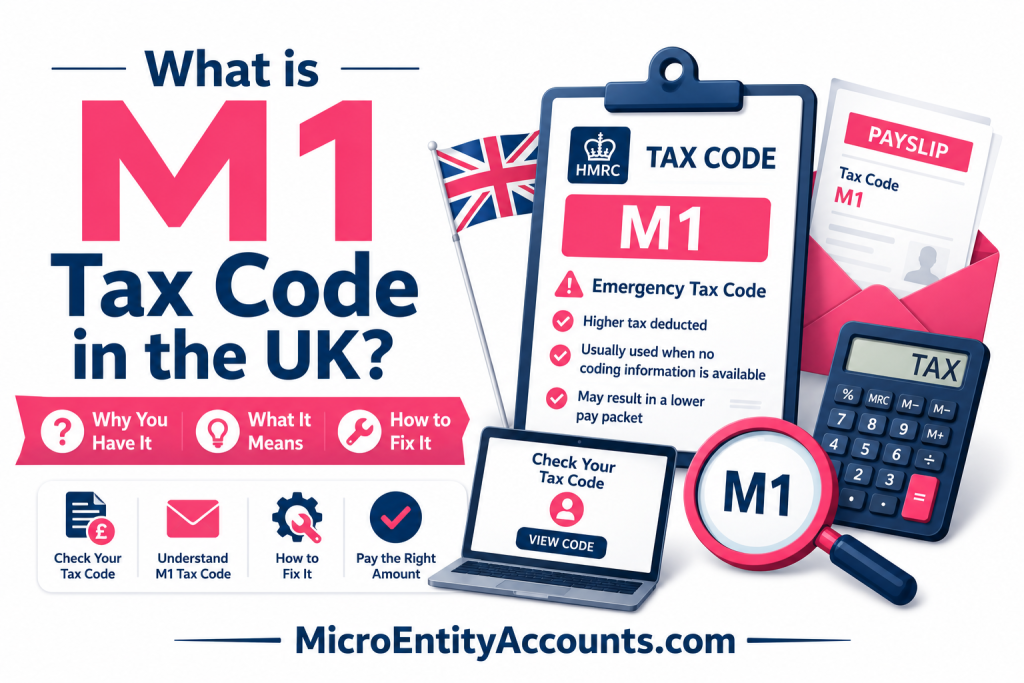
Emergency tax codes like W1, M1, or X are used when HMRC does not have enough information about your income to give you a full year tax code. This often happens when you:
- Start a new job without a P45 from your previous employer
- Start a job for the first time
- Come back to work after a long gap
With an emergency code, your employer calculates tax on each pay period in isolation rather than on a cumulative basis. This means you might pay more tax than you should in those months because none of the previous pay periods are taken into account.
The good news is that HMRC usually corrects this once it processes your information. If you think you are on an emergency code and it has not changed after a month or two, contact HMRC or speak to an accountant.
Is Tax Code 150 Bad?
A tax code of 150 or any similar low number means you have a much lower tax-free allowance than normal. Instead of the standard £12,570, you would only be able to earn £1,500 before tax applies.
This is not necessarily ‘bad’ in the sense that something has gone wrong with your affairs, but it does mean you will pay considerably more tax each month than someone on the standard 1257L code.
Why Would You Have a Low Tax Code Like 150?
There are a few reasons HMRC might give you a reduced allowance code:
- You owe tax from a previous year and HMRC is collecting it through your current pay
- You receive a taxable benefit from your employer such as a company car or health insurance that reduces your effective allowance
- You have untaxed income from another source, such as rental income or a second job, and HMRC is adjusting for that
If you do not recognise why your allowance is so low, it is worth checking your Personal Tax Account on GOV.UK or calling HMRC directly. In some cases, low codes are the result of old information that has not been updated, and you could be due a refund.
You can check and update your tax code at any time by logging into your Personal Tax Account at gov.uk/personal-tax-account. Many people overpay tax simply because they never check their code.
What is a K Code and What Does It Mean for You?
A K code is slightly unusual because it works in reverse. Instead of giving you a tax-free amount, it adds income on top of what you earn for tax purposes.
For example, if your code is K200, HMRC will add £2,000 to your taxable income. This sounds alarming but it has a specific purpose. It is used when you have untaxed income or benefits that are worth more than your Personal Allowance. Common reasons include:
- Unpaid tax from previous years being collected
- A very high-value company benefit like a car that exceeds your allowance
- State Pension that, combined with your employment income, pushes your tax liability above your allowance
There is a legal protection in place that limits how much tax can be deducted under a K code to no more than 50% of your pay in any single pay period.

What are Scottish and Welsh Tax Codes?
If you live in Scotland, your tax code will start with the letter S, for example S1257L. Scottish taxpayers pay different Income Tax rates set by the Scottish Parliament.
As of the 2025 to 2026 tax year, Scotland has more tax bands than the rest of the UK, with a starter rate of 19% and a top rate of 48% for the highest earners.
If you live in Wales, your code starts with C, such as C1257L. Welsh rates currently mirror those in England, though the Welsh Government has the power to set its own rates.
If your code does not have the right prefix and you have moved to Scotland or Wales, you should inform HMRC so your code can be updated. Paying the wrong rate could create a tax bill you were not expecting.
Do Tax Codes Apply If You Are Self-Employed?
If you are self-employed and your only income comes from self-employment, you will not usually have a PAYE tax code. Instead, you pay Income Tax and National Insurance through the Self Assessment system. You file a tax return each year and pay your bill by 31 January.
However, tax codes do become relevant for self-employed people in certain situations:
- You also have employment income or a pension alongside your self-employment
- HMRC collects tax you owe through your employed income using a tax code adjustment
- You receive rental income or other PAYE income
If you fall into one of these categories, you may see a reduced tax code on your payslip from your employed income because HMRC is using it to collect tax owed on your self-employment profits at the same time.
How Do You Check or Change Your Tax Code?
There are three main ways to deal with a tax code you think is wrong:
1. Check Your Personal Tax Account
Log into your Personal Tax Account at gov.uk. You can see your current tax code, the reason behind it, and your tax history for the current and previous years.
2. Contact HMRC Directly
You can call the HMRC income tax helpline on 0300 200 3300. Have your National Insurance number and recent payslip to hand. If your code is wrong, HMRC will issue an updated one directly to your employer.
3. Speak to an Accountant
If your tax situation is more complex, for example you are self-employed, have multiple income sources, or have received a benefit-in-kind, an accountant can review your full position and make sure HMRC has the right picture. This often pays for itself very quickly when you consider the tax that can be reclaimed or avoided.
HMRC can only reclaim overpaid tax from the last four tax years. If you have had the wrong code for a long time, acting sooner rather than later means more money back in your pocket.
FAQs About UK Tax Codes
Can I have more than one tax code?
Yes. If you have two or more sources of PAYE income, for example two jobs or a job and a pension, each one will have its own tax code. Your full Personal Allowance will usually be applied to your main income, with a BR or D0 code on the second source so you do not receive the allowance twice.
What happens if my tax code is wrong?
If you have been on the wrong code, HMRC will either send you a refund at the end of the tax year or collect any underpayment through your tax code in the following year. The safest approach is to check your code regularly and contact HMRC if anything looks off.
Why does my tax code change every year?
HMRC updates tax codes at the start of each tax year to reflect any changes to the Personal Allowance and your personal circumstances. If there has been no change in your situation, your code may stay the same, but you should still check the P2 notice when it arrives.
What is the difference between a W1 and M1 code?
Both W1 and M1 are emergency codes that mean tax is calculated on a non-cumulative basis. W1 is used for weekly paid employees and M1 is used for monthly paid employees. Neither means you are in trouble, but they should be corrected as soon as your information is updated with HMRC.
Does my tax code affect National Insurance?
No. Your tax code only affects Income Tax. National Insurance is calculated separately based on your earnings in each pay period and has its own thresholds. They are two completely separate deductions on your payslip.
The Bottom Line
Your tax code might look like a random combination of numbers and letters, but each part has a clear meaning and a direct impact on how much tax you pay. Understanding it does not require an accounting qualification. It just requires knowing what to look for.
Whether you are a business owner, a sole trader with some employment income on the side, or simply an employee who wants to make sure they are not overpaying, checking your tax code is one of the quickest wins available to you. If something does not look right, do not leave it, because HMRC will not always catch mistakes automatically.
If you are unsure about your tax code or want a professional to review your overall tax position, the team at Micro Entity Accounts is here to help. We work with small business owners and the self-employed across the UK every day, and we know how much difference the right advice can make.
Disclaimer: The content on MicroEntityAccounts is for informational purposes only and do not constitute tax or financial advice. We recommend consulting a certified tax professional or the HM Revenue and Customs Dept (HMRC) for accurate guidance. MicroEntityAccounts is not responsible for any decisions made based on the information provided.