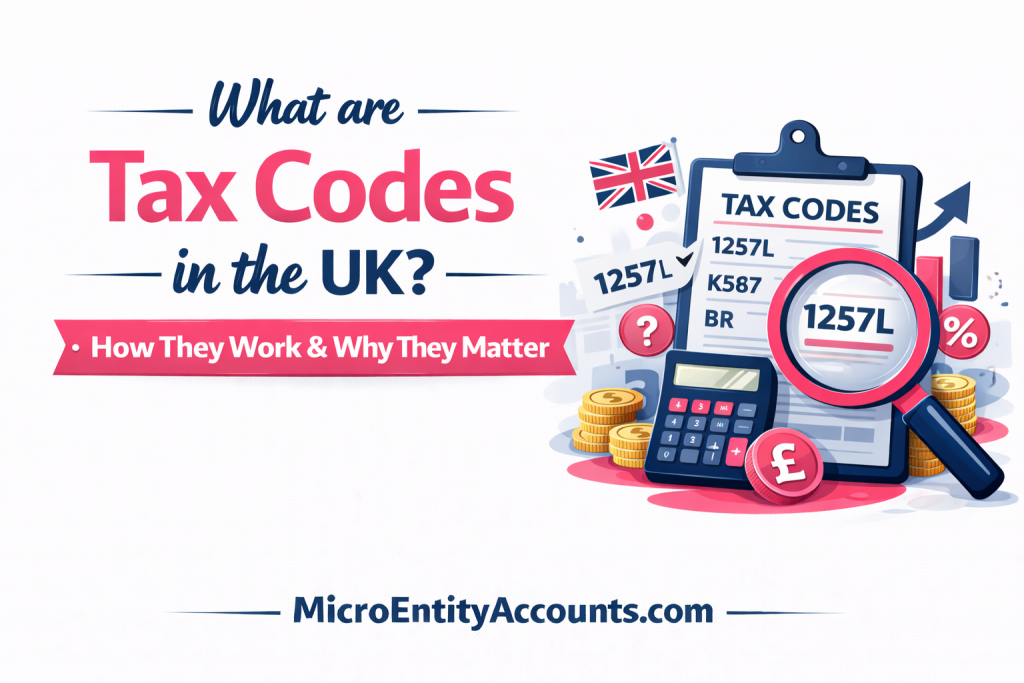
D0 tax code is a UK PAYE tax code issued by HM Revenue & Customs (HMRC) that instructs employers to tax all income from a specific job or pension at the 40% higher-rate income tax band with no Personal Allowance applied.
D0 tax code for secondary employment or additional pensions applies when the employee’s £12,570 Personal Allowance is already used by a main job or primary pension.
Higher-rate D0 tax code ensures correct PAYE deductions when a worker has multiple income sources, such as a second job, freelance contract, or workplace pension. HMRC may assign this code through a tax coding notice to prevent underpaid income tax across combined earnings.
What is the D0 Tax Code?
The D0 tax code tells your employer or pension provider to deduct Income Tax at the higher rate of 40% on all your income from that source. No Personal Allowance is applied, meaning every pound you earn from that job or pension is taxed.
HMRC issues tax codes to your employer so they know how much tax to take from your pay. Each code has a meaning. The letter D at the start stands for the higher rate of Income Tax, and the 0 means zero Personal Allowance is applied.
D0 Tax Code at a GlanceTax Rate Applied: 40% on all income from that source Personal Allowance: None (£0) Issued by: HMRC Applies to: Second jobs, second pensions, or other income sources Current Tax Year: 6 April 2025 to 5 April 2026 |
How Does Income Tax Work in the UK? (2026)
Before diving deeper into the D0 code, it helps to understand how UK Income Tax works. HMRC divides your income into bands, and each band is taxed at a different rate. The table below shows the current rates for England, Wales, and Northern Ireland for the 2025 to 2026 tax year, as confirmed on GOV.UK:
| Band | Taxable Income | Tax Rate |
| Personal Allowance | Up to £12,570 | 0% |
| Basic Rate | £12,571 to £50,270 | 20% |
| Higher Rate | £50,271 to £125,140 | 40% |
| Additional Rate | Over £125,140 | 45% |
Every individual gets a standard Personal Allowance of £12,570. This is the amount you can earn completely tax-free. If your income goes above £100,000, your Personal Allowance reduces by £1 for every £2 above that threshold, and disappears entirely once your income reaches £125,140.
If you live in Scotland, different Income Tax rates and bands apply.
Why Have I Been Given a D0 Tax Code?
The most common reason HMRC assigns a D0 tax code is that you have more than one job or pension. Here is how it typically works:
- Your main job already uses your full Personal Allowance of £12,570.
- Any income from a second job or second pension has no allowance left to apply.
- Because your total income puts you into the higher rate band (above £50,270), HMRC taxes your second income source at 40%.
- So they issue a D0 code to that second employer or pension provider.
For example, if you earn £55,000 from your main job and then take on a second job earning £10,000 a year, all of that £10,000 from your second job sits in the higher rate band. HMRC will therefore issue a D0 code to your second employer.
Is D0 an Emergency Tax Code?
No, the D0 tax code is not an emergency tax code. This is one of the most common misunderstandings people have about it.
Emergency tax codes in the UK usually look like 1257L W1, 1257L M1, or simply 1257L on a week-one or month-one basis. HMRC uses these when they do not yet have enough information about your income to give you the right code. They are temporary.
The D0 tax code, on the other hand, is a deliberate, calculated code issued by HMRC when they have assessed your income across multiple sources and determined that higher rate tax applies to a specific income stream.
It is not temporary by design, it stays in place until your circumstances change or you contact HMRC to update your tax position.
That said, there are situations where a D0 code can be incorrect, for instance, if HMRC has the wrong information about your other income. If you think your code is wrong, you should contact HMRC or speak to a qualified accountant. More on that below.
Do You Get Taxed 40% on a Second Job?
Not necessarily, but you might. It depends on your total income across all sources.
Here is the key point: HMRC does not treat each job in isolation. They look at your total income for the year. Your Personal Allowance is applied to your primary income source first (your main job or pension). Whatever is left over goes to any secondary income.
When Will Your Second Job Be Taxed at 20%?
If your total income across all your jobs is below £50,270, and your main job already uses your full Personal Allowance, then income from your second job will be taxed at the basic rate of 20%. In this case, HMRC will usually issue a BR tax code (not D0) to your second employer.
When Will Your Second Job Be Taxed at 40%?
If your total income pushes you above the higher rate threshold of £50,270, then the income from your second job that falls above this level will be taxed at 40%. HMRC will issue a D0 code to your second employer so they can deduct tax at the higher rate.
| Quick Example
Main job salary: £47,000 (uses full Personal Allowance, taxed at 20% on income above £12,570) Second job salary: £10,000 Total income: £57,000 The first £3,270 of second job income keeps you in the basic rate band. The remaining £6,730 of second job income is taxed at 40%. HMRC may issue D0 to simplify collection — taxing all second job income at 40%. You can then claim a refund at the end of the tax year if you have overpaid. |
What is the Difference Between D0 and BR?
Both BR and D0 tax codes apply to secondary income sources like a second job or a pension, and neither applies a Personal Allowance. The key difference is the rate of tax charged.
| Feature | BR Tax Code | D0 Tax Code |
| Tax Rate | 20% (Basic Rate) | 40% (Higher Rate) |
| Personal Allowance Applied? | No | No |
| Used For | Second job or pension — basic rate taxpayer | Second job or pension — higher rate taxpayer |
| Common Scenario | Part-time second job for most workers | High earners with multiple income sources |
When Does BR Apply?
HMRC uses the BR code when your second income should be taxed at the basic rate of 20%. This is typically for people whose total income does not reach the higher rate tax band (£50,270 for the 2025 to 2026 tax year).
When Does D0 Apply?
HMRC uses the D0 code when your total income puts you into the higher rate band, meaning your second income source should be taxed at 40%. It can also apply to pension income in some circumstances.
It is worth noting there is also a D1 tax code, which applies the additional rate of 45% — used when your total income exceeds £125,140. D0 and D1 follow the same principle but at different rate bands.
What Should You Do If You Have a D0 Tax Code?
Step 1 – Check If It Is Correct
First, work out whether your total income across all sources genuinely puts you into the higher rate tax band. If it does, D0 is likely correct and no action is needed beyond keeping your records in order.
Step 2 – Check Your Personal Allowance
Log in to your Personal Tax Account on GOV.UK to see your current tax codes and Personal Allowance. You can also check how much tax you have paid in the current year and what HMRC expects you to pay for the rest of it.
Step 3 – Contact HMRC If Something Looks Wrong
If you believe your D0 code has been issued in error, for example, if your total income does not actually reach the higher rate threshold, you should contact HMRC directly to have it reviewed. You can do this via your Personal Tax Account online or by calling the HMRC Income Tax helpline on 0300 200 3300.
Step 4 – Claim a Refund If You Have Overpaid
If you have been taxed at 40% under a D0 code but your total income for the year ends up being lower than expected, you may have overpaid tax. HMRC will usually adjust this automatically at the end of the tax year, but you can also submit a claim for a refund if you think you are owed money back.
Can a D0 Tax Code Be Applied to a Pension?
Yes. The D0 tax code can be applied to pension income, not just employment income. If you receive income from more than one pension, HMRC may apply D0 to one of them to ensure you are paying the right amount of tax overall.
For example, if you have a State Pension and a private pension, your State Pension may be treated as your main income source and use up your Personal Allowance. Your private pension provider would then receive a tax code from HMRC, and if your total income is in the higher rate band, that code would be D0.

What Happens If Your D0 Code is Wrong?
An incorrect D0 code means you could be paying too much tax every month. While HMRC often corrects this at the end of the tax year, that still means your take-home pay is reduced in the short term, which can affect your cash flow.
If you contact HMRC and provide the correct details about your income, they can issue a new tax code to your employer straight away. Your employer will then adjust your tax deductions in the next pay period.
Common reasons a D0 code might be issued incorrectly include:
- HMRC has outdated information about one of your income sources.
- You have recently left a job and your income has dropped.
- HMRC was not notified about a change in your pension arrangements.
- A previous employer or pension provider gave HMRC inaccurate information.
Do You Need to Complete a Self Assessment Tax Return with a D0 Code?
Having a D0 tax code does not automatically mean you need to file a Self Assessment tax return. However, if your income from all sources is above £100,000, or if you have untaxed income from self-employment or other sources, you will likely need to file a return regardless of your tax code.
If you are self-employed and also have employment income with a D0 code, you will almost certainly need to complete a Self Assessment return. This is where your total income picture is assessed and any underpaid or overpaid tax is settled with HMRC.
Summary – Key Things to Remember About the D0 Tax Code
- D0 means all income from that job or pension is taxed at 40% with no Personal Allowance.
- It is not an emergency tax code, it is a deliberate code issued by HMRC.
- It is most common when you have a second job or pension and your total income is above £50,270.
- The difference between BR and D0 is the rate: BR = 20%, D0 = 40%.
- You may be entitled to a tax refund if you end up overpaying.
- Always check your tax code via your Personal Tax Account on GOV.UK.
- If something does not look right, contact HMRC or speak to a qualified accountant.
Not Sure About Your Tax Code?
Tax codes can get complicated, especially when you have multiple income sources. At Micro Entity Accounts, we work with business owners and self-employed individuals across the UK to make sure they are on the right tax codes, not paying more than they should, and meeting all their obligations with HMRC. Get in touch today for a straightforward conversation about your tax position.
Disclaimer: The content on MicroEntityAccounts is for informational purposes only and do not constitute tax or financial advice. We recommend consulting a certified tax professional or the HM Revenue and Customs Dept (HMRC) for accurate guidance. MicroEntityAccounts is not responsible for any decisions made based on the information provided.