VAT on flowers UK refers to the Value Added Tax treatment of cut flowers, plants, and floral arrangements under UK tax law, primarily governed by the VAT Act 1994 and HMRC guidance. Cut flowers sold on their own are generally zero-rated for VAT, meaning 0% VAT applies at the point of sale.
Flowers supplied as part of a bouquet with standard-rated items, gift sets, event décor, or corporate hospitality may be subject to the standard 20% VAT rate depending on whether the supply is classified as single, multiple, or composite.
VAT on flowers for business use, including staff gifts, client entertainment, office decoration, or resale by florists and event companies, affects whether input VAT can be reclaimed. Zero-rated flowers for everyday retail sale differ from standard-rated decorative or promotional supplies with added goods or services.
What Does VAT on Flowers Actually Mean?
VAT, or Value Added Tax, is a consumption tax that is added to the price of most goods and services sold in the UK. The standard rate is 20%, but some goods are taxed at a reduced rate of 5%, and others are completely zero-rated, meaning the VAT rate is 0%. There is also a category of goods that are fully exempt from VAT.
When it comes to flowers, HMRC classifies most cut flowers, plants, and bulbs as zero-rated goods. This sits under the VAT Act 1994, Schedule 8, Group 3, which covers plants used for food or as living plants for decorative purposes.
In everyday terms, this means that when you walk into a florist and buy a bunch of roses, you are not paying any VAT on them, even though the price may seem high.
That said, there are important nuances for businesses, which we will cover below.
What is the VAT Rate for Flowers?
The VAT rate for flowers in the UK is 0% in most cases. Here is a breakdown of how different flower-related products are treated for VAT:
- Cut flowers (e.g. roses, lilies, tulips): Zero-rated (0% VAT)
- Live plants sold for decoration: Zero-rated (0% VAT)
- Seeds and bulbs intended for food production: Zero-rated (0% VAT)
- Artificial flowers or dried flower arrangements: Standard-rated (20% VAT)
- Flower delivery charges: Usually follow the VAT rate of the main supply
- Gift hampers containing flowers mixed with standard-rated goods: The whole supply may become standard-rated depending on its nature
The key point here is that fresh, natural flowers are zero-rated, but anything artificial or mixed with standard-rated goods may attract 20% VAT. If you are a VAT-registered florist or business, getting this classification right on your invoices matters a lot.
Is There VAT on Flowers from Interflora?
This is one of the most commonly searched questions around this topic, and it is a fair one. Interflora is one of the UK’s largest flower delivery services, and many business owners order flowers through them for clients or corporate events.
Interflora and similar flower delivery services follow the same HMRC VAT rules as any other florist. The flowers themselves are zero-rated.
However, there may be delivery charges, service fees, or add-on products (like chocolates, vases, or greeting cards) that are standard-rated at 20%.
When you receive a receipt from Interflora, it is worth checking whether they have split the VAT between the zero-rated flowers and any standard-rated extras. If the order includes items taxed at 20%, you may be able to reclaim that portion of VAT if you are VAT-registered and the purchase is for a genuine business purpose.
Always keep your receipts and check for a VAT number on the invoice. A supplier must include their VAT registration number on the invoice for you to make a valid VAT reclaim.
Does Interflora Charge VAT on Delivery?
Delivery charges follow what HMRC calls the ‘principal supply’ rule. If the main item being delivered is zero-rated (e.g., fresh flowers), the delivery charge is usually also zero-rated.
But if the delivery is for a mix of zero-rated and standard-rated goods, HMRC guidance suggests the delivery charge may need to be apportioned or treated as standard-rated. This is worth checking with your accountant if you regularly order flowers for business use.
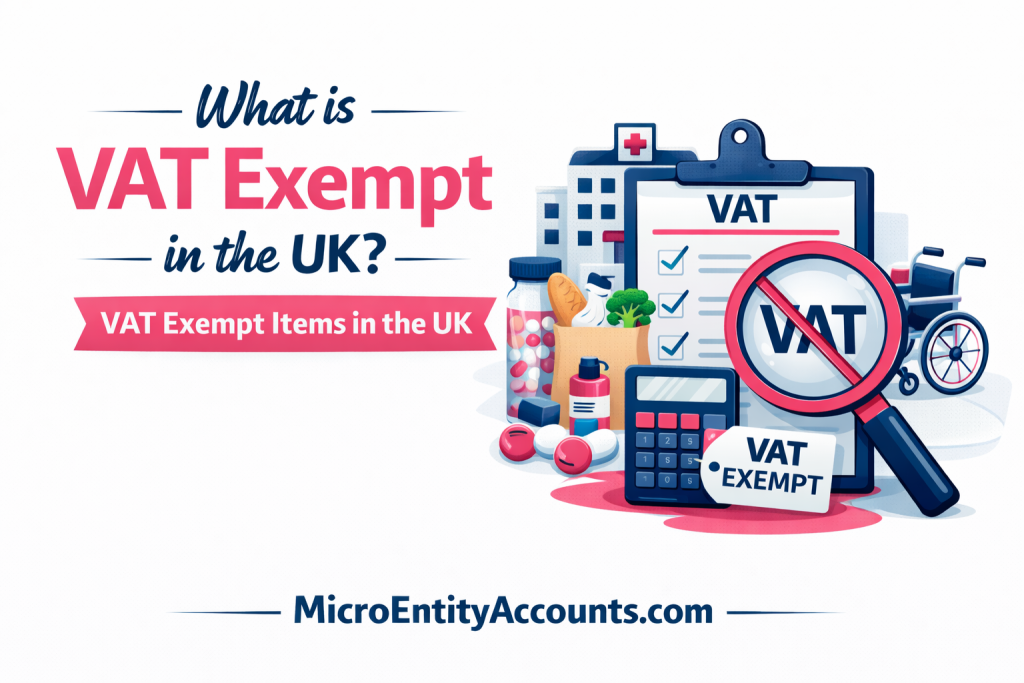
Which Items Are Exempt from VAT in the UK?
Understanding the difference between zero-rated and VAT-exempt items often causes confusion among business owners. They are not the same thing, and the distinction matters if you are VAT-registered.
Zero-rated goods: VAT is charged at 0%. Businesses selling zero-rated goods can still register for VAT and reclaim VAT on their purchases. Most fresh food, children’s clothing, books, and, as covered in this article, most flowers fall into this category.
VAT-exempt goods: These are completely outside the VAT system. Businesses that only sell exempt goods cannot register for VAT and cannot reclaim VAT on their business purchases. Examples include insurance, financial services, health services, and some educational services.
Here are some common UK goods and services that fall under one of these two categories:
- Fresh food and groceries: Zero-rated
- Children’s clothing and footwear: Zero-rated
- Books and newspapers: Zero-rated
- Most fresh flowers and live plants: Zero-rated
- Prescription medicines: Zero-rated
- Insurance services: Exempt
- Bank charges and financial services: Exempt
- Private healthcare services: Exempt
- Private school education: Exempt (though this changed in January 2025 with the removal of the exemption for private schools, worth checking current guidance)
If you are a business owner and you are unsure whether something you buy or sell is zero-rated or exempt, it is always best to check with HMRC directly or speak to a UK accountant. Getting this wrong on your VAT return can result in penalties.

Can You Claim VAT on Flowers for Clients?
This is where many business owners get stuck, and understandably so. The short answer is: it depends on the nature of the purchase and what HMRC deems as an allowable business expense.
Since most fresh flowers are zero-rated, there is technically no VAT to reclaim on them in the first place. You are not paying 20% VAT on a bunch of flowers, you are paying 0%. So the VAT reclaim question rarely applies to the flowers themselves.
However, if you ordered flowers from a florist or delivery service and the invoice includes standard-rated items (like a vase, chocolates, or other taxable goods included in the arrangement), you could potentially reclaim the VAT on those specific elements, provided:
- You are VAT-registered with HMRC
- The purchase was wholly and exclusively for business purposes
- You have a valid VAT invoice from a VAT-registered supplier
- The goods were not used for personal or mixed purposes
Are Flowers Sent to Clients Tax Deductible?
This is a slightly different question from VAT, and it relates to Corporation Tax or Income Tax rather than VAT. HMRC does allow businesses to deduct certain client gifts as a business expense, but there are strict rules.
Gifts to clients are only allowable as a tax deduction if they cost no more than £50 per person per year and carry a conspicuous advertisement for your business (like a branded item). Flowers generally do not carry branding, so they often fall outside this rule and are not tax deductible as client gifts.
That said, if flowers are purchased for a genuine business function, such as decorating a business premises, a corporate event, or a client-facing reception area, they may be treated differently.
In these cases, the cost could be considered an allowable business expense. Always keep records and speak to your accountant about how to categorise these correctly.
What About VAT for Florists and Flower Sellers?
If you run a florist or sell flowers as part of your business, understanding VAT is particularly important when it comes to your VAT returns and registration threshold.
Because fresh flowers are zero-rated, your sales of fresh flowers do not attract output VAT. However, you can still register for VAT voluntarily if your turnover is below the current VAT registration threshold (£90,000 as of the 2025/26 tax year).
Voluntary registration can actually benefit a florist because you can reclaim VAT on your business purchases, things like packaging, shop rent (if VAT applies), vehicles, equipment, and utilities, even though you are not charging VAT on your flower sales.
When Does a Florist Have to Charge VAT?
A florist must charge VAT at the standard rate of 20% on any supplies that are not zero-rated. Common examples include:
- Artificial flowers and silk arrangements
- Decorative vases and pots sold separately
- Gift wrapping services (where charged separately and identifiably)
- Chocolates or confectionery included in a bouquet arrangement
- Balloon arrangements (unless they contain live flowers as the main component)
Where a bouquet is a mixed supply, some zero-rated, some standard-rated, HMRC expects the business to apply an apportionment method to calculate the correct VAT. This can be done based on the cost or selling price of each component.
How to Handle VAT on Mixed Flower Arrangements
Selling or buying a hamper or gift set that includes both flowers and other products can complicate things quickly. HMRC has specific guidance on ‘mixed supplies’ and ‘composite supplies’. Here is how to think about it:
Composite supply: When different elements are so closely linked they form a single product, the VAT treatment of the main element usually applies to the whole thing.
For example, a bouquet of fresh flowers with a simple decorative ribbon may still be zero-rated if the flowers are clearly the dominant supply.
Mixed supply: When the components are distinct and separately identifiable, like a box containing fresh flowers, a scented candle, and a box of chocolates, each element is taxed separately according to its own VAT rate. The flowers are zero-rated, but the candle and chocolates are standard-rated.
For business owners purchasing these kinds of mixed gift sets for clients, it is worth asking the supplier for a split invoice showing the VAT breakdown. This makes it easier to reclaim any standard-rated VAT you are entitled to.
Common Mistakes Business Owners Make with VAT on Flowers
Many business owners either overclaim or underclaim on their VAT returns when it comes to flowers and gifts. Here are some of the most common errors to avoid:
- Trying to reclaim VAT that was never charged: Since fresh flowers are zero-rated, there is no VAT to reclaim. Claiming input tax on a zero-rated purchase is an error that can trigger an HMRC compliance check.
- Not keeping valid VAT invoices: If you do have a standard-rated element on a flower or gift purchase, you need a proper VAT invoice to support your reclaim. A receipt is not always enough.
- Treating artificial flowers as zero-rated: Artificial or silk flowers are standard-rated at 20%, not zero-rated. This is a common mix-up for businesses that decorate their premises.
- Claiming entertainment VAT incorrectly: VAT on ‘business entertainment’ cannot be reclaimed, even if a VAT invoice exists. If you buy flowers as part of entertaining clients, HMRC may disallow the VAT reclaim under the business entertainment block. The exception is if your staff are also attending and the primary purpose is not entertaining external clients.
Quick Summary: VAT on Flowers in the UK
- Fresh, natural cut flowers and live plants are zero-rated for VAT (0%)
- Artificial flowers are standard-rated (20% VAT)
- Interflora and other delivery services follow the same rules, the flowers are zero-rated, but extras like chocolates or vases may attract 20% VAT
- You cannot reclaim VAT on zero-rated purchases (there is no VAT charged to reclaim)
- You may be able to reclaim VAT on standard-rated items included in a flower order, if you are VAT-registered and have a valid VAT invoice
- Business entertainment VAT (including flowers bought to entertain clients) is generally blocked from reclaim
- Florists can benefit from voluntary VAT registration even if their turnover is under the threshold
Need Help with Your VAT Returns?
VAT rules in the UK can be surprisingly complex, even for something as everyday as buying flowers. If you are a business owner or self-employed individual who is unsure how to handle VAT on gifts, client expenses, or mixed supplies, it is always worth getting professional advice before filing your VAT return.
At Micro Entity Accounts, we help small businesses, sole traders, and limited companies across the UK navigate the UK tax system without the jargon.
Whether it is VAT, Corporation Tax, self-assessment, or your annual accounts, we are here to make sure you get it right, and do not pay more tax than you need to.
Get in touch with our team today to find out how we can help.
Disclaimer: The content on MicroEntityAccounts is for informational purposes only and do not constitute tax or financial advice. We recommend consulting a certified tax professional or the HM Revenue and Customs Dept (HMRC) for accurate guidance. MicroEntityAccounts is not responsible for any decisions made based on the information provided.